



Healthcare can involve some incredibly difficult conversations.
Disease progression. Mental health. Sexual health. End-of-life.
These topics can have an enormous impact on someone’s quality of life and care—but that doesn’t make them easy to talk about.
Patients may not know what’s normal, who to ask, or even how to begin. And healthcare professionals aren’t necessarily comfortable—or equipped—to have every conversation either.
That’s one place where good education can make a difference: helping people start the conversation.
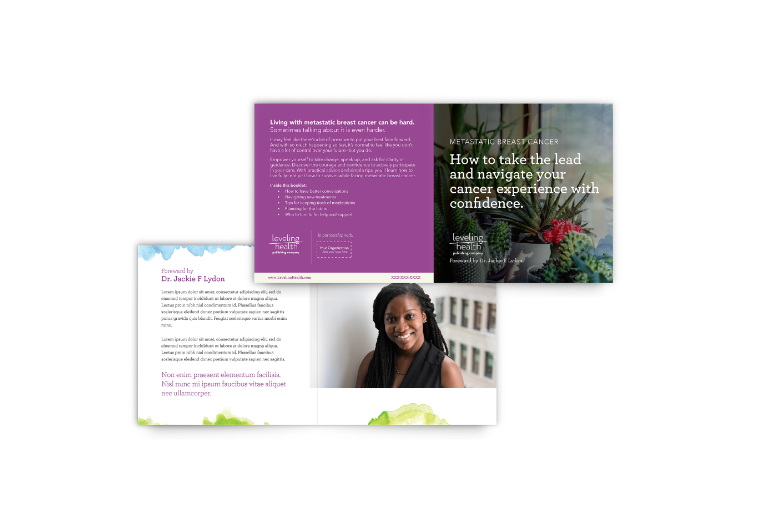
For Breast Cancer Awareness Month, a client came to us looking for a meaningful way to support people living with metastatic breast cancer (MBC). We had addressed sensitive and real-life topics throughout our education before, but this time we had the opportunity to go much deeper—dedicating an entire resource to sex and intimacy.
And we quickly discovered that the challenge wasn’t finding enough to say. It was deciding what was most important to include.
Sometimes a topic that gets a paragraph—or gets left out altogether—deserves a much bigger conversation.

The goal wasn’t to answer every possible question about sex and intimacy. It was to give people useful information, practical support, and a starting point for conversations they may otherwise struggle to have.
That meant helping people navigate questions like:
The answers weren’t always found in the oncology office. Depending on the concern, support might come from a gynecologist, pelvic floor physical therapist, sex therapist, counselor, social worker, support group, or another resource.
That’s an important part of the education, too: helping patients understand what support is available and where to turn.
When patients are waiting for their healthcare professional to bring up sexual health—and healthcare professionals may be waiting for patients to ask—education can help bridge the gap. It gives patients a foundation and healthcare professionals something tangible to share, while helping point people toward additional support when needed.
Good education can create common ground for a difficult conversation.
Related Article: Compassionate Support: The Overlooked Patient Education Strategy
This resource was developed for people living with MBC, but sexual health is relevant across many diseases.
Treatments, surgeries, medications, pain, fatigue, hormonal changes, body image, mental health, and changes in relationships can all affect sex and intimacy.
And the broader communication challenge extends well beyond sexual health.
How deeply we explore those topics depends on the audience, what they need, and what our clients are trying to accomplish.

Awareness initiatives can be an opportunity to do more than repeat what people already know about a disease. They give us a reason to look more closely at what it actually means to live with a disease day in and day out.
What are patients struggling with? What isn’t being talked about? Where could education provide meaningful support?
For this audience, one answer was sex and intimacy.
For another disease—or another audience—the answer may be completely different.
An awareness moment creates the space—good education starts the conversation.
Is there a difficult conversation your patients could use more help starting? We’d be happy to brainstorm with you.


Leave a comment (all fields required)